
 Image 1 of 1
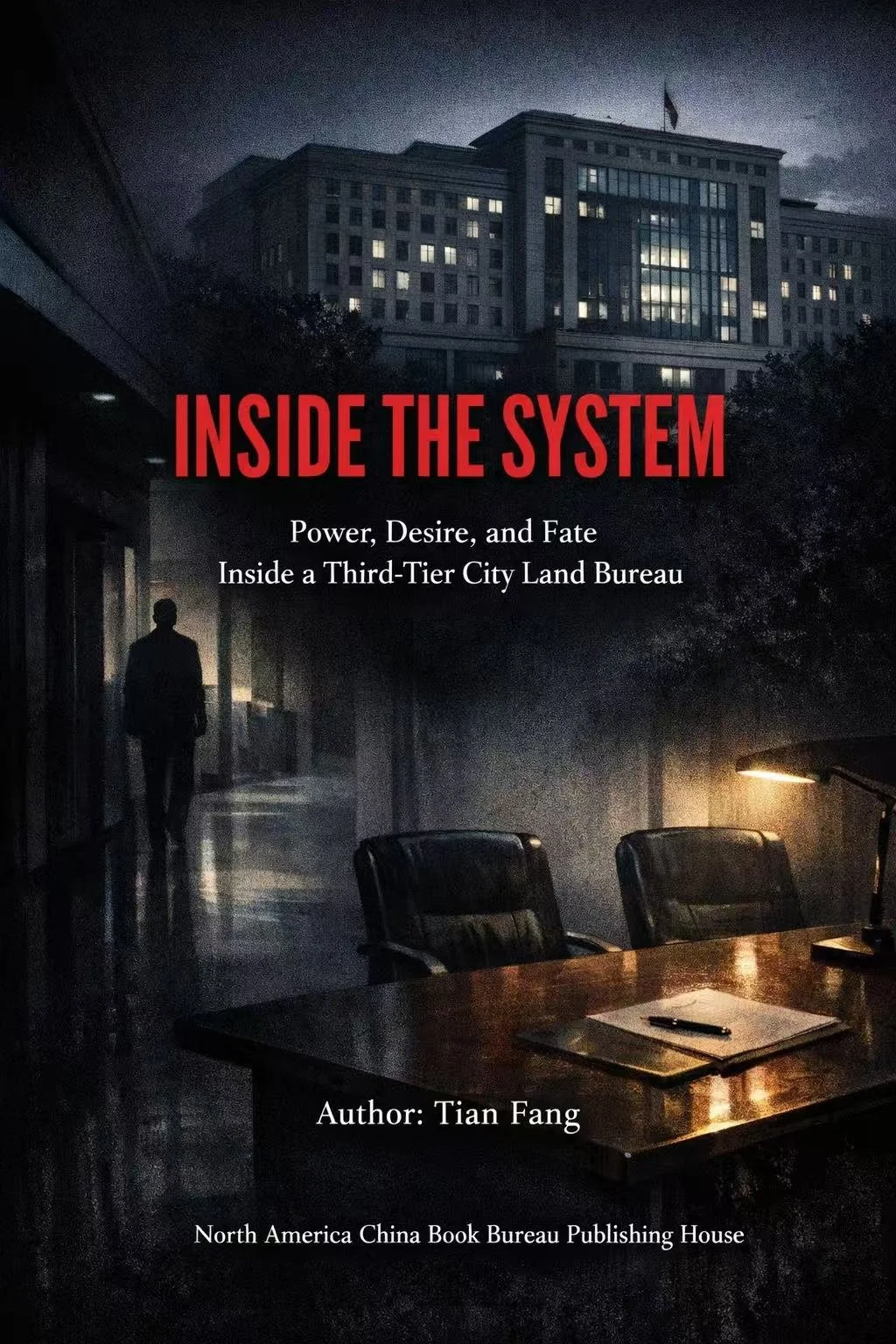
INSIDE THE SYSTEM
Power, Desire, and Fate Inside a Third-Tier City Land Bureau
Inside the System is a stark work of realist fiction set within a land bureau in a third-tier Chinese city—a place where power operates quietly, ambition is carefully concealed, and survival depends less on morality than on timing.
There are no heroes here, and no dramatic villains.
Only officials, clerks, and administrators navigating an intricate system governed by discipline on paper and unspoken rules in practice.
By following the intertwined lives of party secretaries, bureau directors, department heads, and junior staff, the novel exposes the hidden logic of institutional life:
where authority functions by day, desire awakens at night,
where loyalty is declared publicly, and transactions occur privately,
and where every promotion, silence, compromise, or delay quietly reshapes a person’s destiny.
Through these characters, the novel presents five common outcomes rarely acknowledged openly:
those who endure until retirement and enter a medically managed old age;
those who carefully plan their exit, securing wealth and relocating their families abroad;
those who remain strictly upright, only to fade into total irrelevance after retirement;
those who retire but continue to profit as advisors and intermediaries;
and those who misjudge the moment, crossing an invisible line and exchanging an iron rice bowl for a prison cell.
Inside the System does not accuse, justify, or offer moral judgment.
It observes.
This is not a story about good and evil,
but about how people survive, when they choose to leave, and what it costs when they cannot.
Quiet, restrained, and unsettlingly familiar, Inside the System reveals not what the system claims to be—but how it truly works.
INSIDE THE SYSTEM
Power, Desire, and Fate Inside a Third-Tier City Land Bureau
Inside the System is a stark work of realist fiction set within a land bureau in a third-tier Chinese city—a place where power operates quietly, ambition is carefully concealed, and survival depends less on morality than on timing.
There are no heroes here, and no dramatic villains.
Only officials, clerks, and administrators navigating an intricate system governed by discipline on paper and unspoken rules in practice.
By following the intertwined lives of party secretaries, bureau directors, department heads, and junior staff, the novel exposes the hidden logic of institutional life:
where authority functions by day, desire awakens at night,
where loyalty is declared publicly, and transactions occur privately,
and where every promotion, silence, compromise, or delay quietly reshapes a person’s destiny.
Through these characters, the novel presents five common outcomes rarely acknowledged openly:
those who endure until retirement and enter a medically managed old age;
those who carefully plan their exit, securing wealth and relocating their families abroad;
those who remain strictly upright, only to fade into total irrelevance after retirement;
those who retire but continue to profit as advisors and intermediaries;
and those who misjudge the moment, crossing an invisible line and exchanging an iron rice bowl for a prison cell.
Inside the System does not accuse, justify, or offer moral judgment.
It observes.
This is not a story about good and evil,
but about how people survive, when they choose to leave, and what it costs when they cannot.
Quiet, restrained, and unsettlingly familiar, Inside the System reveals not what the system claims to be—but how it truly works.